


From Warship to Reef: The Second Life of INS Guldar
On 20 May 2026, the Maharashtra Tourism Development Corporation (MTDC) announced, in collaboration with the Indian Navy, that the ex-INS Guldar (decommissioned 12 January 2024), would be scuttled off the coast of Sindhudurg with the objective of turning it into an artificial coral reef in order to boost tourism in the region. INS Guldar has played a key role in the 2004 Indian ocean tsunami relief efforts among its other engagements, which in turn prompted the development of this article.


A Kumbhir-class land ship, Guldar was designed for amphibious warfare operations and was constructed at the Gdansk shipyard in Poland. It was commissioned in 1985, and served in the Indian Navy for 39 years until its decommissioning in 2024. With the MTDC announcement, Guldar joins an exclusive club of ships which continue to serve their country even after decommissioning. Plenty of ships around the world have been turned into museums that offer visitors keen insights into how the ship functioned as a unit, as part of a larger task force, and its place in history. Take for example, The Indian Navy’s INS Vikrant, which was based out of the dockyard in Mumbai. Or other famous examples like the USS Intrepid in Philadelphia.
Similarly, the idea of using ships as the basis for artificial reefs is not new. The US Navy has successfully carried out similar projects, the most notable one being the aircraft carrier USS Oriskany, a name that fans of the Top Gun franchise will recognize rather instantaneously. The ship was laid to rest in the gulf of Mexico, near Pensacola in Florida, in 2004 and has served as a recreational diving site since. But this is the first time that such an undertaking will be attempted in India.

Meluha Maritime reached out to Commodore Vijay Pal Singh Rawat, VSM, to garner some insights from his time commanding INS Guldar. Cmde Rawat commanded INS Guldar from May 2004 to February 2006, while the ship was based at Port Blair under the Andaman and Nicobar command. It was under his command that the ship participated in the relief efforts in the aftermath of the 2004 Indian Ocean tsunami, and Cmde Rawat was kind enough to share his experiences with us.
At the time of the 2004 Indian Ocean tsunami, it was based out of Port Blair and was subsequently dispatched to Car Nicobar island, commonly called Carnic, carrying about 180 tonnes of relief supplies. Unfortunately, the Tsunami had caused severe damage to the Moose jetty, where the ship was supposed to be berthed. Additional trepidation was caused by the insufficient length of the jetty, which was built to host 50m ships, whereas the length of INS Guldar was around 105 metres. The harbour was only about 120m wide; engine manoeuvring was nigh impossible, and the ship would have to be manoeuvred only using the prevailing winds, along with skilful anchor work and rope handling.
The ship anchored about 2 nautical miles off the coast, and Cmde Rawat, along with some of his crew, came ashore on a dinghy. They managed to flag down a local resident who took them to the village headquarters. Having explained the situation of the ship and the supplies, Cmde Rawat was informed that a pilot boat would be sent out in the morning to tow a pontoon which would help them unload the supplies; albeit the villagers did stress that they had absolutely no manpower to help with the unloading. With a crew of about 20 personnel on duty, having managed to unload 10 tons on the first day, they realised that the ship did not possess enough fuel to stay for the 18 days it would take to unload the supplies. Alternative solutions would need to be explored. On conversing with the Navy authorities, it was gleaned that all other ships had been dispatched to their own relief missions.
A situation like this demands incredible fortitude and ingenuity, which thankfully was abundant; Cmde Rawat and some of his crew were Marine Commandos and hence skilled in dealing with such peculiar challenges. The crew decided that their first order of business would be charting the harbour, as the tsunami would likely have altered the underwater gradients. Having dived in the harbour and come up with a rudimentary chart, Rawat realised that the ship could enter the harbour, albeit it would be a precarious manoeuvre, and his decision was made. It took the ship close to twelve hours to execute the complete manoeuvre. The exhilaration of the situation was such that close to five hundred residents of the island showed up to witness it – and amid cheers and slogans of “Bharat mata ki Jai!” and “Up, up, INS Guldar!”, the ship finally berthed alongside the jetty. As soon as the ramp was opened for the offloading, a number of civilians rushed into the cargo hold, up to the command deck, and garlanded Cmde Rawat for his efforts.
The rest of the unloading proceeded without incident, and Cmde Rawat as well as INS Guldar went on to render yeoman service to the nation. Cmde Rawat has since retired from the service and now lives in Delhi. Similar to the Guldar, his second innings involve strengthening the country’s defensive capabilities through drone systems. The Guldar, meanwhile, rests peacefully at the bottom of the ocean off the Konkan, waiting to be inhabited by a splendid assortment of coral and visited by curious divers and adventurers.
Varun Pendse
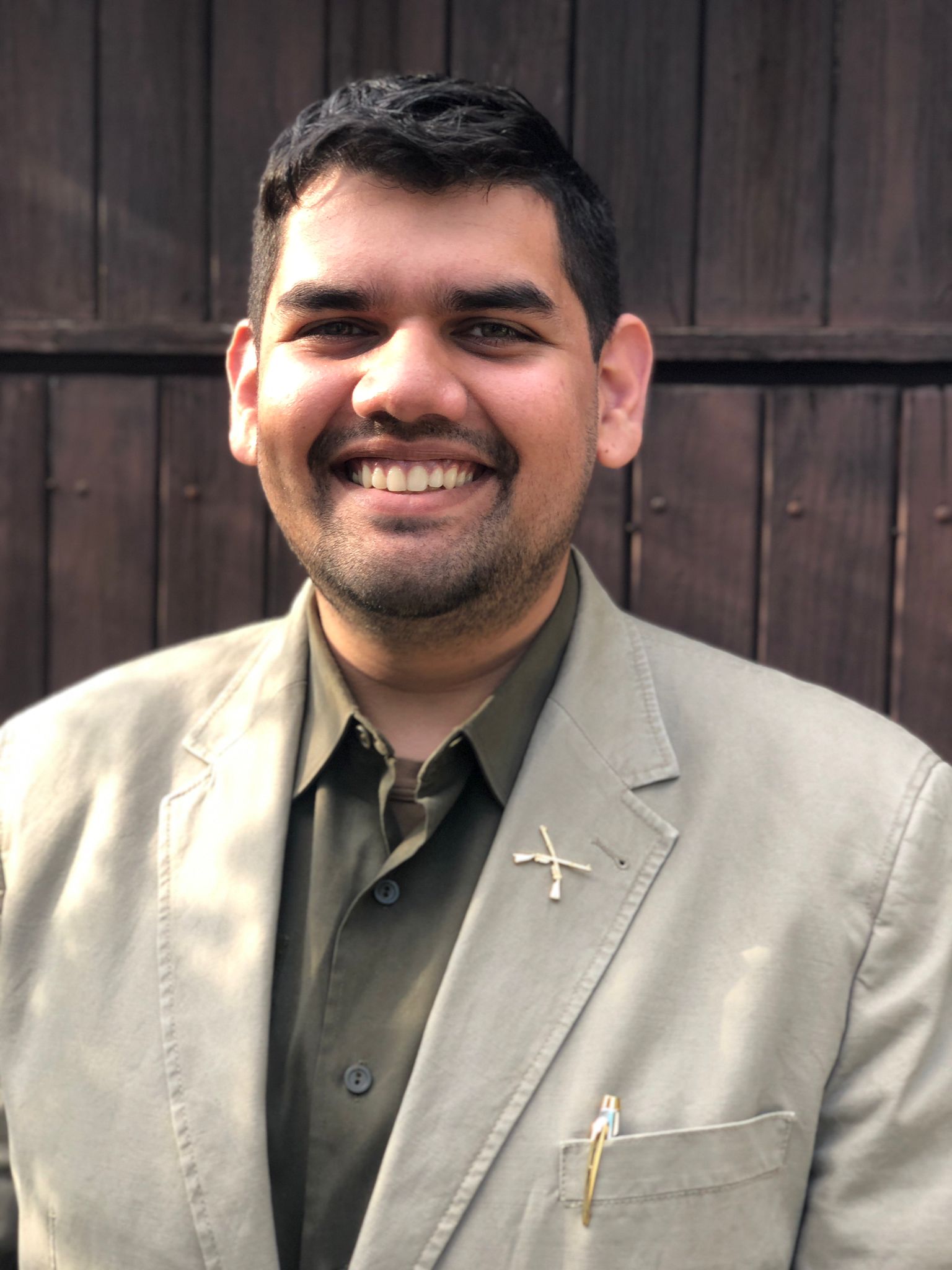
Varun Pendse is a visiting faculty member for English at various institutes, with experience in coaching for various national and international competitive exams, including GMAT, IELTS, CAT, etc. At Meluha Maritime, he is a research associate who assists with content development.
He is a voracious reader, and his experience in coaching and mentorship, coupled with experience in various industries in three countries enables him to take a dynamic yet holistic approach to content and curriculum development, and his background as a Designer and Design Manager enables him to adapt to the perspectives of his clients and disseminate unique project-centric solutions.
Disclaimer: The views and opinions expressed in this article are those of the author.


Comments