


Royal Indian Navy and Partition
- Nitin Shankar
- Aug 16
- 4 min read
In preparation for India’s independence on 15 August 1947 and the ensuing partition between India and Pakistan, an Armed Forces Reconstitution Committee (AFRC) was set up in the Partition Secretariat to divide military assets between the two countries.
A Naval Sub-committee was set up within the AFRC. Its task was to divide the men and ships of the Royal Indian Navy between the newly independent Dominion of India and Dominion of Pakistan. The division of ships was based on two-thirds of the fleet to India, one-third to Pakistan.
The Naval Sub-Committee comprising four members had the task of dividing the men and ships of the Royal Indian Navy between India and Pakistan.
Sailors and officers were given the choice to opt for either the Royal Indian Navy or the Royal Pakistan Navy. 180 officers and 358 personnel, either Muslim or European, volunteered for transfer to the Royal Pakistan Navy (RPN). The senior most executive officer was Captain (acting) Haji Mohammad Siddique Choudri while the senior most engineering branch officer was Lieutenant Commander (acting) Ikram Khan Mumtaz. Vice-Admiral Sir Geoffrey Miles, Commander-in-Chief, RIN, appointed these two officers to represent the Royal Pakistan Navy as members on the Naval Sub-Committee.

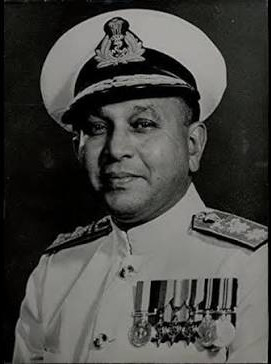
As the senior most executive branch officer, Captain Choudri stood a good chance of becoming the first Indian RIN Commander-in-Chief. However, as a native of Punjab, he opted for the RPN. It was a sacrifice of sorts but a blessing for Pakistan.
Vice-Admiral Miles selected Captain (acting) Bhaskar Soman to represent India’s interests on the Naval Sub-Committee. While Captain Choudri and Captain Soman were the first RIN officers to attain the acting rank of captain, the former was senior to the latter.
Captain Soman selected Lieutenant Commander (E) Daya Shankar to be a member of the Naval Sub-Committee. Lt-Cdr. Daya Shankar, an engineer officer serving as Gun Mounting Officer, Bombay, was transferred to NHQ, Delhi in June 1947.
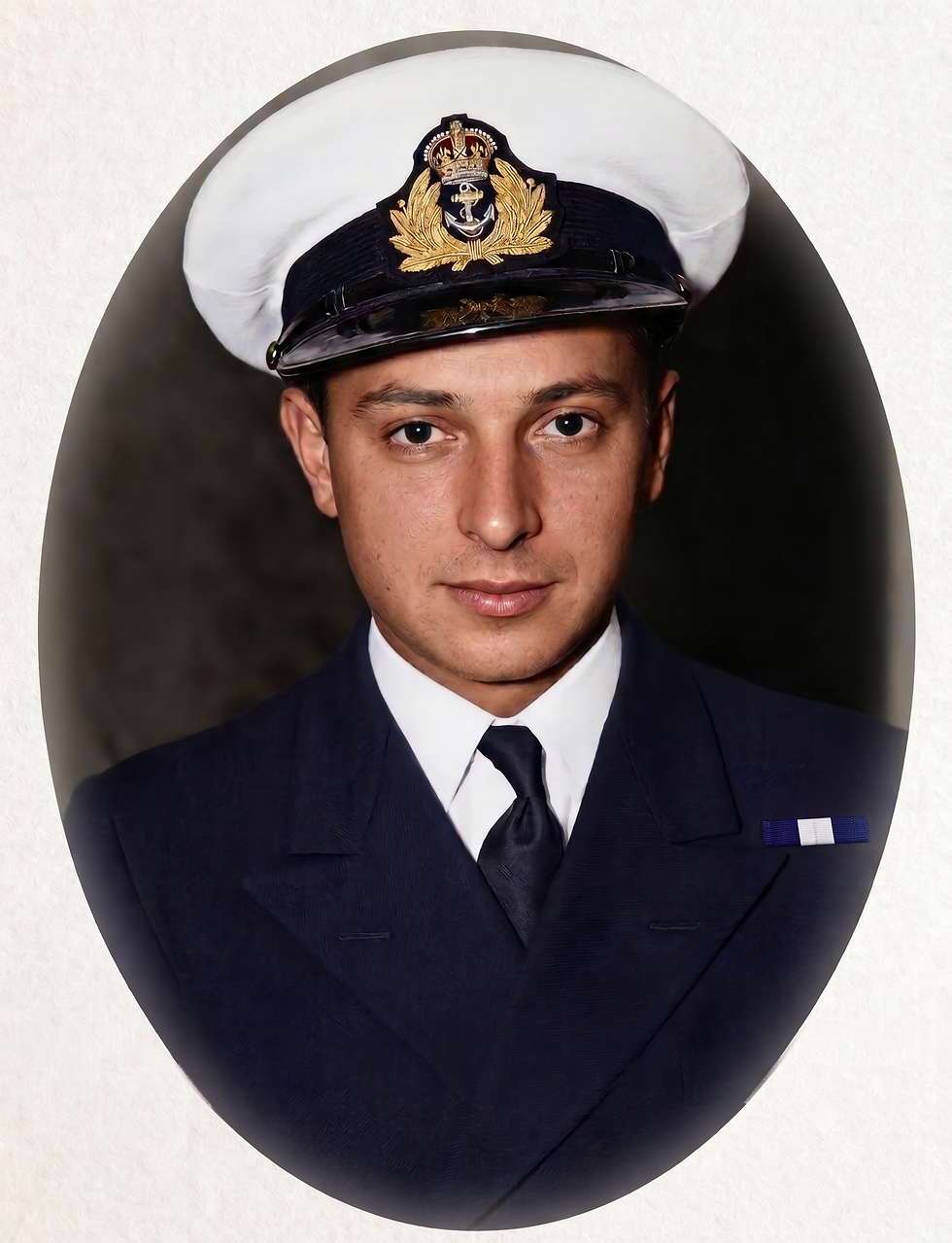
Although they had not served together, the four officers on the Naval Sub-Committee knew each other well. Thus, from the start, the relations were extremely cordial.
Commander (acting) Daya Shankar and Lt-Cdr. Ikram Mumtaz were close friends. Both were in the engineering branch. Both were from the United Provinces. They met often in June as Lt-Cdr Mumtaz was in two minds about volunteering for the RPN. He did not relish the idea of moving from Delhi to Karachi on a permanent basis. Finally, in consultation with his wife, he opted to join the RPN.
The Naval Sub-Committee agreed on most issues concerning the division of ships. However, there was one sticking point. Both Captain Choudhri and Captain Soman wanted the HMIS Narbada, the RIN flagship, to be given to their Navy.

Cdr Daya Shankar and Captain Soman met one evening to resolve this impasse. Cdr Shankar explained that the fairest division of the six frigates would be for India to take the two oldest (Sutlej and Jumna) and the two newest (Kistna and Cauvery) and let Pakistan have the two middle ones (Narbada and Godavari). Captain Soman was reluctant until he was told that the one extra cabin in the flagship did not justify accepting a ship that might not be seaworthy for a long time.
The next day the Pakistani team in the Naval Sub-Committee pressed for the Narbada. This time Captain Soman gave in. The job was done. There was goodwill on both sides.
The very next day there were banner headlines in the Times of India accusing the Indian team of betraying the trust reposed in them by handing over the Flagship to Pakistan. The mood was ugly.
Captain Soman and Commander Daya Shankar were summoned by Sardar Patel, the Home Minister. He was flanked by the Defence Minister, Sardar Baldev Singh, and three senior secretaries: Mr V Shankar, Mr HM Patel and Mr HC Sarin. Sardar Patel started off by saying that he had placed his trust in them but they had shamefully betrayed that trust; that there were traitors of the worst kind. When he finished, as the guilty party Commander Daya Shankar said,
“Sir, the man who leaked the story to the press does not know the Narbada, nor do you, Sir. I do. I have just completed a term in that ship, I know for sure that the ship will not be seaworthy for at least two years – maybe more. Does one extra cabin justify this? In my considered view, India is better off letting Pakistan have it if they are so keen on it.”
There was a silence for a while. Sardar Patel graciously said that he was satisfied that they had done the right thing. He trusted them.
Aftermath
Vice Admiral H. M. S. Choudri served as Commander-in-Chief of the Pakistan Navy from 1953 till 1959. He resigned after a dispute with President Ayub Khan about the future of the Pakistan Navy.
Admiral Bhaskar Soman served as Chief of Naval Staff from 1962 to 1966. Earlier as FOCIF (Flag Officer Commanding Indian Fleet), he oversaw India’s naval operations during the 1961 Liberation of Goa.
Vice Admiral Daya Shankar served as Chief of Material, NHQ from 1954 till 1958. He later served in the Ministry of Defence as Director-General Ordnance Factories (DGOF) and CGDP (Controller General Defence Production).
Commodore Ikram Khan Mumtaz retired from the Pakistan Navy in 1960. He was appointed as Chairman of the Karachi Development Corporation.
Nitin Shankar
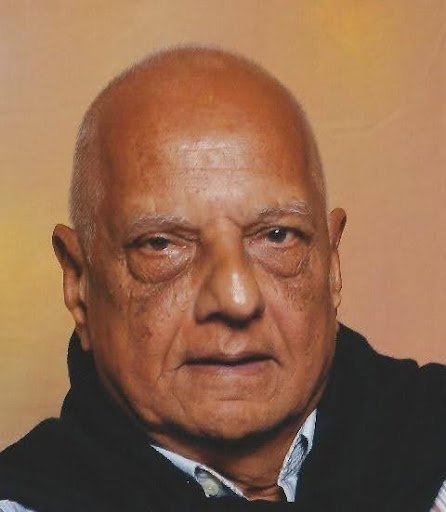
Nitin Shankar, son of the late Vice-Admiral Daya Shankar, was born on 9 April 1939. On obtaining his school leaving certificate in 1954, he went to West-Berlin (Germany) for his engineering studies. After receiving his degree in electrical engineering in 1960, Nitin worked in product development (AEG, Berlin), manufacturing (IBM, Mumbai), consulting (NKS Associates, Mumbai), project management (Machine Sazi, Iran) and production control and sales (TESA, Switzerland). Retired at the age of 65 in 2004, he works as a management consultant and author.


Comments