


Hail the New Chief

Updated: 7 hours ago
Admiral Krishna Swaminathan took over as the 27th Chief of Naval Staff on 31 May at an impressive ceremony in New Delhi. The Admiral follows a long list of distinguished predecessors who, along with the rank and file, have been responsible for the transformation of the Indian Navy, from a small sloop force in 1947 to now being reckoned to be amongst the top five in the world on the basis of combat power and being regarded highly for its professional outlook. The Admiral himself reflects the finest values and virtues of the Indian Navy going by his remarkable biography. This article aims to give some details of his illustrious career over the last 40 plus years.


Krishna Swaminathan grew up in the quiet leafy suburbs of NR Colony, Basavangudi, in south Bengaluru. Both his parents were teachers and Krishna did his primary schooling at Bishop Cottons School, Bengaluru before joining Sainik School, Bijapur (now Vijayapura), a residential school in North Karnataka, in 1977.

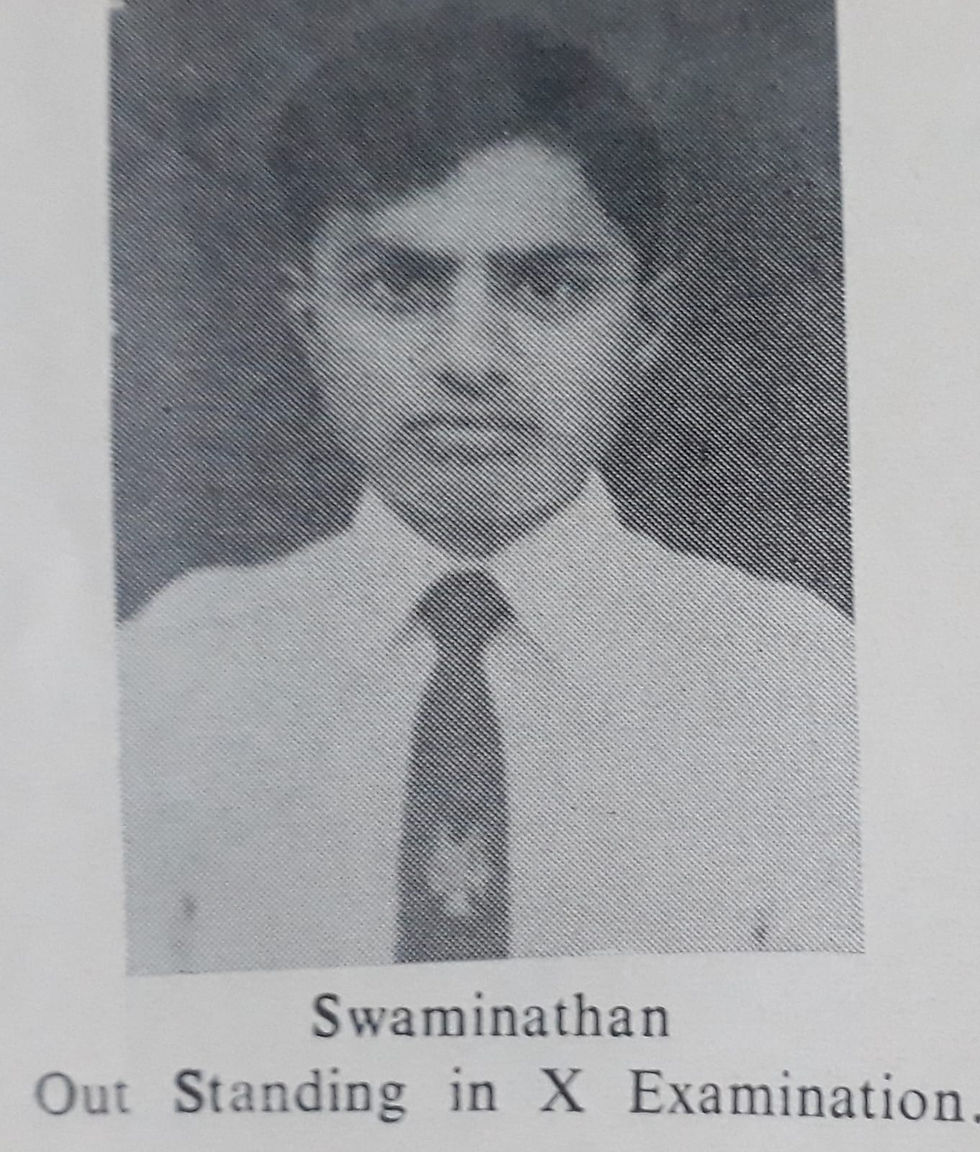
In the school, he performed commendably well in Academics and stood first in his class, in the tenth standard CBSE board exam. He was also outstanding in sports – excelling in all the games played at school viz. hockey, football, basketball and cricket. He was particularly good at cricket and, from all accounts, scored the first ever century in school records; this at a time when team scores used to be less than fifty. He was also very good at debate, elocution, quiz and dramatics. In his ninth standard, at the age of 14 years, he attended the national level Himalayan Mountaineering Institute (HMI) course, for young leaders, at Darjeeling and topped the course. He was rewarded for his consistent performance by being made the School Vice-Captain.

He passed the NDA written examination in his very first attempt and joined the Academy in July 1983, in the 70th course. Here, too, he did commendably well in both academics and outdoors and passed out as the Squadron Cadet Captain (SCC) of Charlie Squadron, in the summer of 1986. It is interesting to note what the NDA Journal ‘Who’s Who’ mentions about him. Written by juniors of the squadron, these are usually unsparing one liners about the passing out course; in Swaminath’s case the description reads, “This allrounder’s decency beggars description. OG to the Core”. In a way, that statement reveals three facets of his life that stayed constant throughout – first, his being an allrounder who did well in all disciplines, second, his innate decency and grace in dealing with everyone; in the rough and tumble of NDA life, it’s difficult to earn this epithet, and third, being OG (short form for Olive Green, the Army Uniform) which translates to being committed to the Organisation or the Service.


He was commissioned a year later, on 01 Jul 1987, into the Indian Navy’s Executive branch. Expectedly, he aced the young officers’ initial courses (referred to as Sub Lieutenants Courses) and was among the select few who secured a full 12 months seniority for performing with distinction throughout the year. He obtained his watchkeeping ticket on the ocean-going minesweeper INS Alleppey and was, thereafter, appointed as the Missile Gunnery Officer (MGO) of INS Chamak, a missile boat in the 25th Missile Vessel Squadron. This was the same family of boats that had distinguished themselves in the 1971 War for the daring attacks on Karachi. The squadron continued to be invested with the same fervour. After a year plus in this tenure, he was handpicked as the ADC to the Governor of Uttar Pradesh, a three-year assignment far from sea and the navy but enriching in experience for the young officer.
He then went on to do the mid-career Long Course in Communications and Electronic Warfare, popularly called Long C, at Signal School Kochi. After again performing with distinction during the course, his subsequent tours of duty as a specialist officer included being the Electronic Warfare Officer of INS Viraat, Signal Communications Officer of INS Khukri and back to INS Viraat as the Signal Communications Officer. These years were rich with experience in fleet operations, which is essential grounding for later assignments. He was next appointed as the Executive Officer (second in Command) of INS Vidyut, a guided missile vessel in the 22nd Missile Vessel Squadron. A year later, in 1999, he earned his first skipper’s badge being selected to command INS Vidyut, before sidestepping as the CO of INS Vinash. This was a coveted appointment for which very few are chosen and was a harbinger of greater glories.
In the summer of 2000, he was chosen for the prestigious Advanced Command and Staff Course 4, at the Joint Services Command and Staff College, Shrivenham, United Kingdom. A year later, in 2001, he graduated as the best International Student, among over 90 overseas participants, thereby bringing laurels to India. He went back to sea as the Fleet Electronic Warfare Officer (FEWO) of the Western Fleet, under the command of RAdm (later VAdm) JS Bedi, in which capacity he served until spring 2003. During his tenure as FEWO, the Western Fleet among other things, was forward deployed in the theatre of war for ‘Op Parakram’ and also clocked more than 200 days at sea. As a vital cog in the Fleet planning staff, Swaminathan essayed a very important role, especially in relation to Electronic Warfare tactics. He also got promoted to Commander in June 2002, while in this assignment, thus joining the brass hats club.
His next assignment was as a Directing Staff or Faculty, in the Defence Services Staff College, Wellington, in the salubrious environs of the Nilgiris. However, just after spending about a year there, he was again specially handpicked as the Naval Assistant to the Flag Officer Commanding in Chief (FOCinC) Southern Naval Command, Vice Admiral SCS Bangara. After about two years in this highly demanding tenure, Swaminathan, got his second assignment as a Commanding Officer, this time, as the skipper of the guided missile corvette INS Kulish, in the Eastern Fleet commanded by Rear Admiral (later Admiral) DK Joshi. Command of the Kora class ships are usually considered the most exalted in the rank of a Commander. After a successful command, he was assigned to the Directorate of Naval Signals (DNS) in Naval Headquarters at Delhi and was promoted to the rank of Captain in 2008. In the autumn of the same year, he was nominated for the Naval Higher Command Course, then being conducted at the College of Naval Warfare, at Karanja, Mumbai.
On completion in 2009, then Captain Swaminthan was selected for the very prestigious (that word again) Naval Command College Course at the United States Naval War College, Newport, Rhode Island. Only one officer from a whole batch gets selected for this course and this selection suggests that the officer is at the very top of his cohort. Once again, he performed brilliantly well and, at graduation in 2010, was the recipient of the US Naval War College Foundation Award, which is normally awarded for academic excellence. This author is given to understand that the award has been given only about half a dozen times in more than 100 years. It is also understood that the Naval War College, considering how well he had performed, was very keen to retain him for a few years as Faculty member but the Indian Navy had other plans.
This became apparent when he was appointed as the Naval Assistant (NA) to the Chief of the Naval Staff (CNS), Admiral Nirmal Verma. That assignment was to give him invaluable exposure to the workings at the very apex affording him a masthead view into how the Navy operates. This was followed, in 2012, by another prestigious sea command, a frontline Western Fleet Combatant, the guided missile destroyer, INS Mysore. This was when the policy had been changed for the Delhi class ships from being ‘second command for Captains’ (as in after Command of another frontline Fleet ship) to being the first command. This implied that the very best among the batch would be chosen, to command these platforms, at that point of time.
After a successful command tenure, he went back to NHQ and after a short stint in the DNS, he was back again as NA to the CNS, Admiral RK Dhowan. This further enhanced his exposure to naval and national leadership at the highest levels and the intricacies of decision making at the apex. In 2015, he was appointed to the most coveted position in the Navy – the Command of the Navy’s (then) only aircraft carrier INS Vikramaditya. This appointment of great distinction showed the Navy’s trust in his professional calibre and leadership qualities. Handling a 45000-ton behemoth is very challenging, and as its second skipper, Swaminathan had to sustain the operational momentum and keep the flattop optimally available while meeting various benchmarks for the ship and its aircraft.

It was no surprise then that in 2016, he was promoted to the rank of Rear Admiral. He moved to Southern Naval Command (SNC) in Kochi where he took over as the Chief Staff Officer (Training), heading the training vertical of the Training Command. The remit and geographical expanse of SNC is vast and wide. The fact that he was the first two-star officer in this billet cast an onerous responsibility on him. This was further accentuated by the fact that he also had to dual hat as the CSO (Safety), a new vertical that the Navy had just created to streamline doctrinal and training aspects of safety. From there, in 2019, he was assigned another important post viz. that of Flag Officer Sea Training, who is responsible for work up of all seagoing units and also acts as the auditing authority on their level of readiness and combat preparedness.
In Feb 2020, he was given the most acclaimed job for a two-star officer, viz the command of the Western Fleet, the Sword Arm of the Indian Navy. His tenure was particularly challenging as it coincided with the Covid pandemic. It needs to be noted here, that on warships which are extremely cramped and have closed spaces, creating necessary physical distance and isolation were extremely demanding requirements. The danger that even one sailor affected by Covid could render a whole unit hors de combat (as it happened with some advanced Navies of the world) loomed large. The ships had to be kept Covid free yet operational and available for tasking, including for humanitarian outreach by the Government of India in the Indian ocean region. In the middle of all this, the Galwan incident happened and the Armed Forces were mobilised for any eventuality. The Navy thus had to be so operationally deployed to meet the escalating situation under the overhang of COVID. Operational and administrative structures had to be created not just to keep units combat worthy but also personnel and their families healthy, continuously monitored and happy. It was a superhuman challenge to which the Fleet, under his leadership, responded splendidly.


Subsequent to his Fleet tenure, he briefly tenanted the post of the Flag Officer Offshore Defence Advisory Group (FODAG) and Advisor, Offshore Security and Defence to the Government of India. This tenure enabled him to further understand the intricacies of security of energy which is one of the key tasks of the Navy. He was promoted to the rank of Vice Admiral in Sep 2021 and he took over as the Chief of Staff of the Western Naval Command. As the de facto Deputy CinC and virtual number two of the command, he was the chief planner, enabler and strategist for a host of Command activities and missions across all verticals – operational, technical, administrative, training and medical. In April 2023, he was back in Naval Headquarters in the Personnel (or P) branch, first as the Controller Personnel Services (CPS), and a few months later, as the Chief of Personnel (COP). In these assignments every aspect related to naval personnel – both uniformed and civilian – postings, promotion, recruitment, training, medical, welfare, sports, adventure, legal, ceremonial and such like were under his remit.
On 01 May 24, he assumed the high office of the Vice Chief of the Naval Staff (VCNS) at Naval Headquarters. In the Navy, the Vice Chief apart from being the senior most Principal Staff Officer (PSO), also looks after a vast domain that includes future plans, force acquisition, shipbuilding and more. He officiates when the CNS is out of town and is also the top-level budget holder of the Navy. Thus, allocation, management and accountability of of the Navy’s revenue budget also fall in his domain. He is also, sometimes, humorously referred to as the CinC of Navy’s Northern Command. His tenure here witnessed ‘Op Sindoor’ orchestrated by the three forces and as the VCNS, he would have, undoubtedly, had a ringside view apart from contributing to Navy’s plans. Swaminathan handled this job with his typical finesse and elan before he was appointed as the Flag Officer Commanding-in-Chief of the prestigious Western Naval Command in July 2025.

The Western Naval Command is the Navy’s largest Command with most of Navy’s assets and human resources within this command. The area of responsibility of the command is vast, covering the Persian Gulf, Arabian Sea, Red Sea area and waters of the West Indian Ocean going all the way to the African Coast. It encompasses India’s maritime states of Gujarat, Maharashtra, Goa and Karnataka. These states are also India’s most prosperous as the bulk of India’s EXIM trade happens through them. The physical proximity of hostile neighbours and volatile regions makes the maritime security scenario constantly unpredictable. The challenges for the CinC were to meet these demands of security, sustain peace, have the units under him ready for any eventuality especially since ‘Op Sindoor’ is still ongoing and the situation in West Asia has exacerbated tensions. The 10 months he spent in this assignment would have undoubtedly been busy and arduous but the perfect ground for preparing him for the top job of CNS.
Consequently, his appointment as the CNS, in early May, was welcomed by vast sections of the veteran community, commentariat and media since the officer is regarded as a top quality professional and a very affable human being. There are high expectations that he will add lustre to the high office because of his personal qualities. While the chronological delineation above gives us the skeletal framework regarding his career, some aspects that need emphasis are further outlined below.
First, the Admiral has had an impressive exposure across all verticals of the Navy – in Operations, courtesy his initial tours of duty on ships, his appointment as FEWO, his Command tenures in all the ranks on the most coveted platforms, his assignments in DNS, his tenure as FODAG, his command of the Western Fleet and Western Command; in training as the DS at DSSC, as CSO (Trg) and FOST at SNC; in Personnel and Administration as CPS and COP; and in higher echelons across many verticals, as COS WNC, VCNS and CinC.
Second, he is very highly regarded for his outstanding staff work. To have been ADC to Governor, NA to CinC and NA to CNS twice indicates the huge level of trust the system had in him to manage the responsibilities of running the high functionary’s office as well be his principal aide/Executive Assistant. These assignments test an officer’s ability to multi-task, think on the move, draft correspondence, gauge the mind of the person he is working with, to be the principal interlocutor in interactions between him and others, and to maintain discretion. Of course, the experience these assignments gave him would have been vital for his own understanding too.
Third, the officer is a scholar warrior in the complete sense of the word and is well known for his erudition and articulation. He has a string of degrees which include a BSc degree from Jawaharlal Nehru University, New Delhi; a diploma in Management from Xavier’s College Mumbai; MSc in Telecommunications from the Cochin University of Science and Technology, Kochi; MA in Defence Studies from King’s College, London; MPhil in Strategic Studies from Mumbai University; and a PhD in International Studies from Mumbai University. His PhD thesis was on the ‘The Role and Relevance of Maritime Power in the Rise and Fall of Nations: A Perspective on Global Powershifts’. He worked for his PhD, between 2012 and 2016, when he was handling some of the busiest jobs in the Navy, including his sea commands and NA tenures. He has also contributed handsomely to many books published by the Indian Navy – these include the History of Southern Naval Command, the History of the Eastern Fleet and photo essay books on INS Mysore and INS Vikramaditya. His sterling successes in the courses abroad also shed light on his academic brilliance and high level of scholarship.
Fourth, this is accompanied by a good sense of aesthetics, by a keen interest in history and literature and in travel, nature and wildlife. He is quite well read and has a very good sense of humour with self-deprecatory wit as an accompaniment. While his ready affable smile is most spoken about, he also has a laughter which fills the room with verve when he gets into the mood. He is ambidextrous and is skilful with both hands in many things he does. He also has a fairly good and clear handwriting.
Fifth and very interestingly, he is also a very high-quality sportsman and, arguably, one of the fittest in the rank. He continues to play Cricket, Golf, Tennis at very high level; in fact, a couple of years ago he even played football in an exhibition match against film stars where the rest of the players were less than half his age. Navy veterans of Mumbai ruefully recollect how he singlehandedly won a cricket match for the team of serving officers against veterans couple of years ago. He swims actively and treks often. Above all, he is an enthusiastic marathon runner; he runs about 5-6 half marathons in a season. His timing at the Indian Navy Half Marathon in New Delhi Feb 2026 was about 1 hour 57 mins and, more recently in April, he ran the TCS 10 km in Bangalore in just about 57 mins. That’s very enviable timing for a person almost touching 60 years and speaks volumes about his fitness regimen and athletic abilities.
Sixth, and most importantly, Admiral Krishna Swaminthan has a reputation of being very grounded, socially amiable, accessible to one and all, of someone who flaunts no attitude and who doesn’t wear his rank on his sleeves despite his outstanding accomplishments. His genuine good nature, innate decency and old world courtesy, ability to listen and respond, to maintain friendships and good equations across rank-and-file mark him as someone very different from the mould. He remains in touch with school teachers and classmates, attends weddings of children of classmates and close friends even if it means red eye flights and late-night bus journeys to small towns. He is very helpful to those working in social service and for social causes, facilitating their efforts while remaining anonymous. His ability to respond to almost anyone who messages him is legion.
The alchemy of all these qualities adds to his appeal and to his stature. As the CNS he will need all these qualities in full measure to respond to the multifaceted challenges he himself had brought out in his first brief statement to the media viz “of maintaining the highest level of operational readiness and combat effectiveness in a regional security environment that is challenging, complex, unpredictable and uncertain while continuing capability enhancement and modernisation”. His rich catalogue of experiences, his multifaceted exposure to various disciplines and entities and his own abilities will undoubtedly help in his next assignment as the Navy’s Chief Helmsman.
To those of who have known him for long it remains for us to say ‘Hail the New Chief’. Wishing him fair winds and following seas and a fruitful tenure!

Commodore Srikant B Kesnur
Photos courtesy: Indian Navy and the author's personal collection
Commodore Srikant B Kesnur, a Navy veteran, is founder of Meluha Maritime. This article is anchored in his nearly 50-year association with Admiral Swaminathan.

Disclaimer: The views and opinions expressed in this article are those of the author.



Great reading.Our best wishes to our super CNS Admiral Krishna Dwaminathan
Thank you for the writeup. The Admiral has an enviable record. As Ajeets we can be justifiably proud of him. I was very happy to note that he is a marathoner. Hope to see him in one of the marathons at Delhi.
Very proud to have studied in the same school as the Chief!
Still remember his warm invitation to all Bangalore based Ajeets sometime last year, an endearing personality he displays the traits of an awesome human being.
I have never read a better illustration than this.
WBZ Kesnur
Wish the best for Meluha Maritime
Sir , Heartiest congratulations and appreciation to you for writing such kind and inspiring words in praise of the Chief of Naval Staff. Your thoughtful message reflects great respect and admiration for the leadership and values of the Indian Navy.